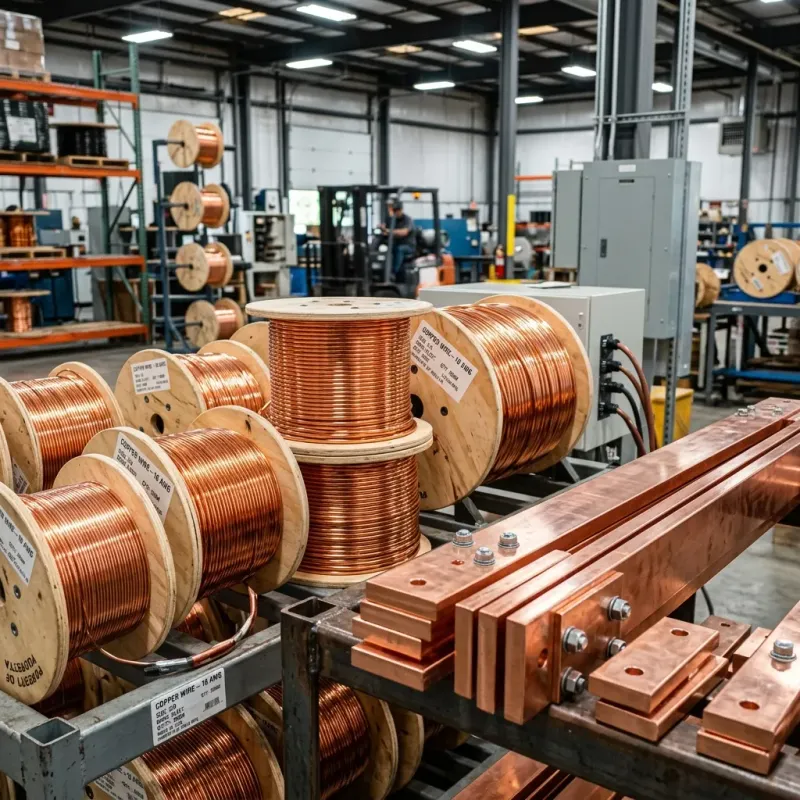
If you have purchased a submersible pump, flat cable, or L&T control panel in the last 12–18 months, chances are you paid significantly more than you did two or three years ago. The culprit is not inflation alone — it is copper. The red metal sits at the very heart of every pump motor winding, every cable conductor, and every bus bar inside an electrical panel. And its price has been on a relentless climb.
In this dispatch, we break down exactly what is happening with copper prices in India, why it is happening, and what you should realistically expect when budgeting for a borewell installation or a pressure-boosting project today.
How Much Have Copper Prices Actually Risen?
Global copper prices on the London Metal Exchange (LME) have risen from approximately $8,000 per metric tonne in early 2023 to touching record highs above $10,000 per metric tonne continuing into 2026—a massive jump in just a few years. In India, this is compounded by the depreciation of the Indian Rupee against the US Dollar and high import dependency, since India mines and smelts a fraction of the copper it consumes.
The result: the price of refined copper that Indian manufacturers pay has increased sharply, with no sign of a sustained reversal on the horizon.
Why Is Copper Getting So Expensive?
Understanding the "why" helps you plan better. Several interconnected forces are at work:
1. The Energy Transition Mega-Demand
The global push toward electric vehicles (EVs), solar energy, and wind power is creating a structural copper demand shock unlike anything seen before. A single EV requires 3–4 times more copper than a conventional petrol car. A utility-scale wind turbine requires 4–5 tonnes of copper. As India aggressively expands its solar and green energy capacity, this domestic demand adds to already-strained global supply.
2. Supply Chain Disruptions from Mining Nations
Chile and Peru — together responsible for over 40% of global copper production — have faced repeated disruptions: labour strikes, water scarcity shutdowns, and tighter environmental regulations. When mines reduce output, prices react immediately.
3. India's Import Dependency
India has significant copper ore reserves, but limited domestic smelting and refining capacity. We import a large share of finished copper cathodes. Every time the Rupee weakens against the Dollar, the landed cost of copper in India rises — even if global LME prices hold flat.
4. AI and Data Centre Infrastructure Boom
A newer driver: global hyperscale data centre buildouts require enormous quantities of copper for cooling systems, power distribution units, and server interconnects. This demand from the tech sector has created an additional layer of structural demand that did not exist a decade ago.
The Direct Impact on What You Buy
Submersible Pump Motors
The motor is the single most copper-intensive component in a borewell installation. Motor windings — the coils of copper wire inside the stator — are responsible for converting electrical energy into mechanical rotation. In a typical 5 HP submersible motor, copper windings account for a substantial portion of the motor's material cost.
Manufacturers such as Varuna, Kirloskar, and KSB have all absorbed rising copper costs and eventually passed them on in revised price lists. Industry reports indicate that pumpset prices increased by 10–15% or more between 2023 and early 2026, with the consumer-end increase sometimes reaching 25–30% once dealer margins and GST are factored in.
Flat Submersible Cables
Flat submersible cables are almost entirely copper — three insulated copper conductors bound in a flat configuration. Copper accounts for roughly 60–70% of the material cost of these cables. This makes them the single most price-sensitive product in the borewell supply chain.
Every 10% increase in global copper prices translates to approximately 4–6% increase in finished cable prices at the wholesale level. For a deep borewell requiring 150–200 metres of 2.5 sq mm cable, this adds a meaningful amount to your project budget.
Electrical Control Panels
L&T, Siemens, and other panel-grade switchgear products rely on copper bus bars for power distribution inside the panel enclosure. Rising copper costs affect bus bar pricing, which flows through to assembled panel costs. VFD panels, DOL starters, and Star-Delta panels have all seen price revisions in the past 18 months.
The impact here is somewhat moderated because panels contain other components (MCBs, contactors, relays, sheet metal enclosures) that do not use copper, diluting the total cost impact compared to pure-cable products.
At Xanausun, we strongly advise procuring flat cables and motors from authorized dealers with transparent billing. The grey market has seen a surge in substandard, low-copper-content cables that falsely claim standard gauge specifications — a false economy that leads to motor burnout and borewell downtime.
What This Means For Your Budget
Here is a realistic cost-impact framework for a standard residential borewell installation of 150 metres depth with a 5 HP pump:
| Component | Approx. Price (2022–23) | Approx. Price (2026) | Change |
|---|
| 5 HP Submersible Pump | ₹28,000 – ₹35,000 | ₹38,000 – ₹48,000 | +25 to +35% |
| 150m Flat Cable (2.5 sq mm) | ₹14,000 – ₹18,000 | ₹19,000 – ₹25,000 | +30 to +40% |
| DOL Starter Panel | ₹4,000 – ₹6,500 | ₹5,500 – ₹8,500 | +20 to +30% |
Note: Prices are indicative and vary by brand, specification, and market conditions.
How to Navigate Rising Prices — Xanausun's Guidance
1. Do not delay unnecessarily. The trajectory of copper demand from EVs and renewable energy suggests prices are likely to stay elevated or increase further, not revert to pre-2022 levels.
2. Specify branded, ISI-grade cable. The temptation to save money by using unbranded or under-gauge submersible cable is the most common false economy we see. A motor running on undersized cable draws excess current, overheats, and burns out — costing you 3–5x the cable savings in pump replacement.
3. Get a fixed price quote. If you are procuring equipment for a large project, ask your supplier for a valid-through quote that locks in pricing. Copper price fluctuations mean open quotations can change within weeks.
4. Evaluate VFD panels for large installations. While VFD panels have a higher upfront cost, they dramatically reduce electricity consumption — often recovering their cost within 2–3 years in electricity savings. As copper drives up motor prices, maximizing motor life and efficiency becomes more important than ever.
Conclusion
The era of ₹200-per-metre flat cable and ₹25,000 five-HP pumps is likely behind us. Copper's structural demand from the green energy transition and digital infrastructure means elevated prices are not a temporary shock — they are the new baseline. Understanding this reality helps you plan projects with realistic budgets, specify quality materials that last, and avoid the false economics of cheap substitutes.
At Xanausun, we source all pumps, cables, and panels directly from authorized distributors — ensuring you pay fair, transparent prices for genuine, grade-verified materials. Contact our team in Ahmedabad for an up-to-date project quotation.