Monoset vs. Monoblock Pumps: Understanding the Difference
Confused between Monoset and Monoblock pumps? This technical guide breaks down their construction, mechanical advantages, and ideal applications in agricultural and industrial fluid transfer.
Confused between Monoset and Monoblock pumps? This technical guide breaks down their construction, mechanical advantages, and ideal applications in agricultural and industrial fluid transfer.
When specifying surface centrifugal pumps for agricultural irrigation, HVAC cooling towers, or municipal water transfer, two terms are constantly thrown around interchangeably: Monoset Pumps and Monoblock Pumps.
While colloquial use often blurs the lines between them, technically and mechanically, there are distinct nuances in their construction. Understanding these differences can save your facility significant maintenance downtime and capital expenditure. Let's clarify the industry jargon.
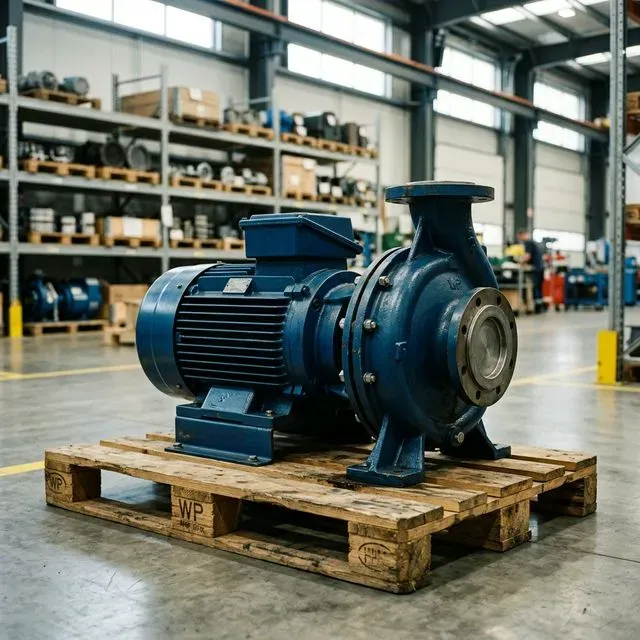
The phrase "Mono-block" literally means "one body." In a true monoblock pump, the electric motor and the pump volute (the casing housing the impeller) are integrated into a single, cohesive unit.
The term Monoset is primarily used within the Indian subcontinent (and heavily by heritage brands like Kirloskar) to describe surface centrifugal pumps that are effectively... monoblocks.
However, historically and in strict industrial nomenclature, a "set" implies a Pump Set—a distinct pump end and a distinct motor end mounted together on a common baseplate and connected via a flexible or rigid coupling.
In modern retail, when a dealer refers to an agricultural "Monoset," they are almost always referring to a horizontal monoblock pump. But when an industrial engineer specifies a "centrifugal pump set," they are demanding a frame-mounted, coupled unit.
If monoblocks are cheaper and perfectly aligned, why do massive industrial plants still use coupled pump sets?
For 90% of agricultural irrigation, residential water supply, and light commercial transfer below 25 HP, a Monoblock / Monoset pump is the ideal, economical choice.
But if you are designing a high-temperature industrial processing plant or continuous-duty municipal waterworks requiring rapid motor hot-swapping, you must graduate to a Frame-Mounted Coupled Pump Set.
Looking for rugged surface pumps? Xanausun supplies premium end-suction, monoblock, and split-case centrifugal pumps from Kirloskar and KSB across Gujarat. Contact our engineering desk today for sizing parameters.